Chad James Group
Brand identity and creative operating system · Art Director / Brand Strategist · 2023–present
The brief
The firm presented itself in a single weight of Garamond and a single shade of green, and client documents were formatted by hand, one at a time.
My role
I rebuilt the identity, then built the system that lets the rest of the firm hold it. The firm’s interior designers and production staff use it every day to make on-brand client materials without a graphic designer.

Decisions
The identity came first. I redrew the icon to healthier proportions and moved the firm from one weight of Garamond to Arlt, a full family with historical details and a modern form.

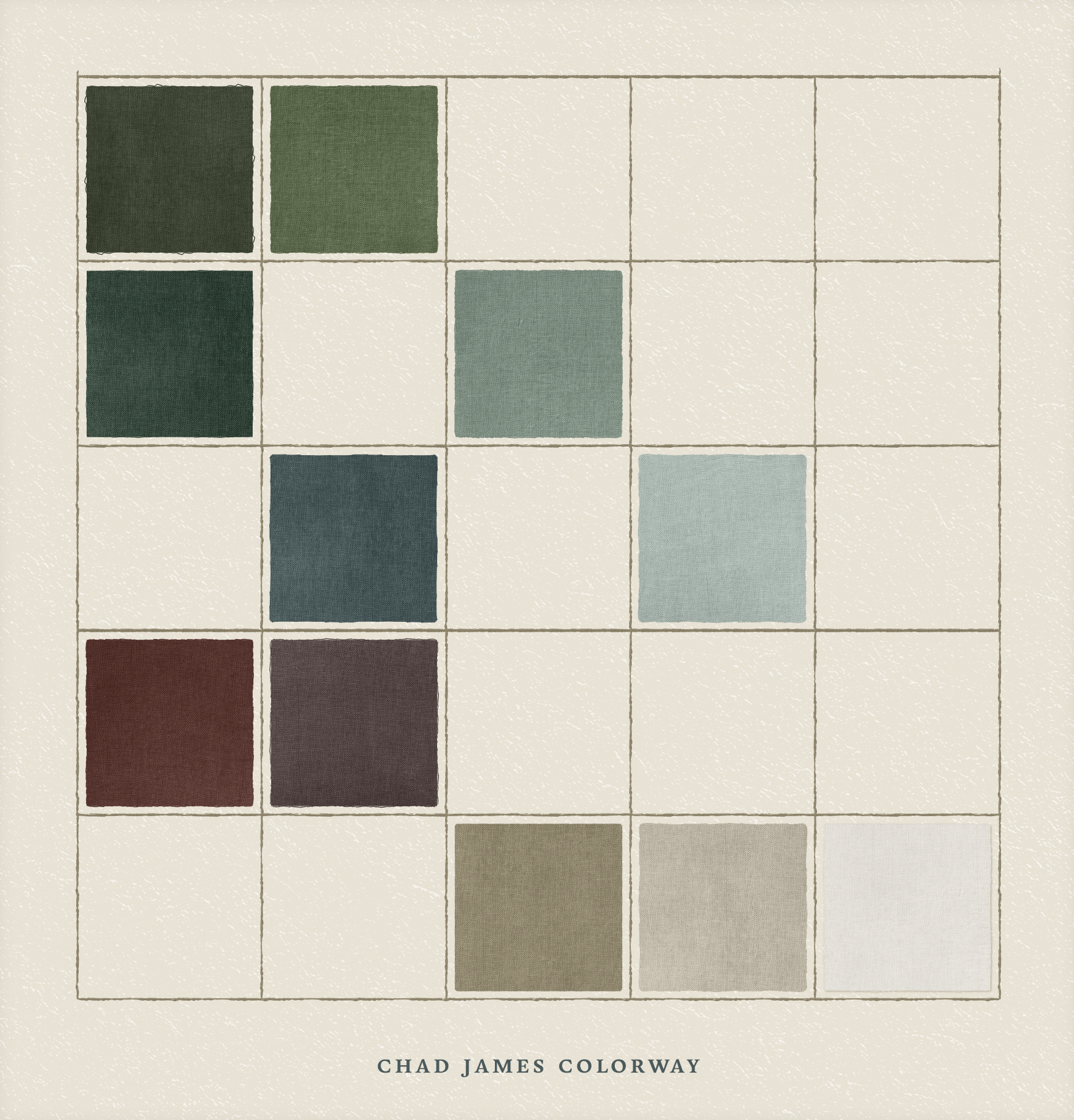
One named colorway covers print, screen and the studio, and later carried straight into The Foundations of Home.
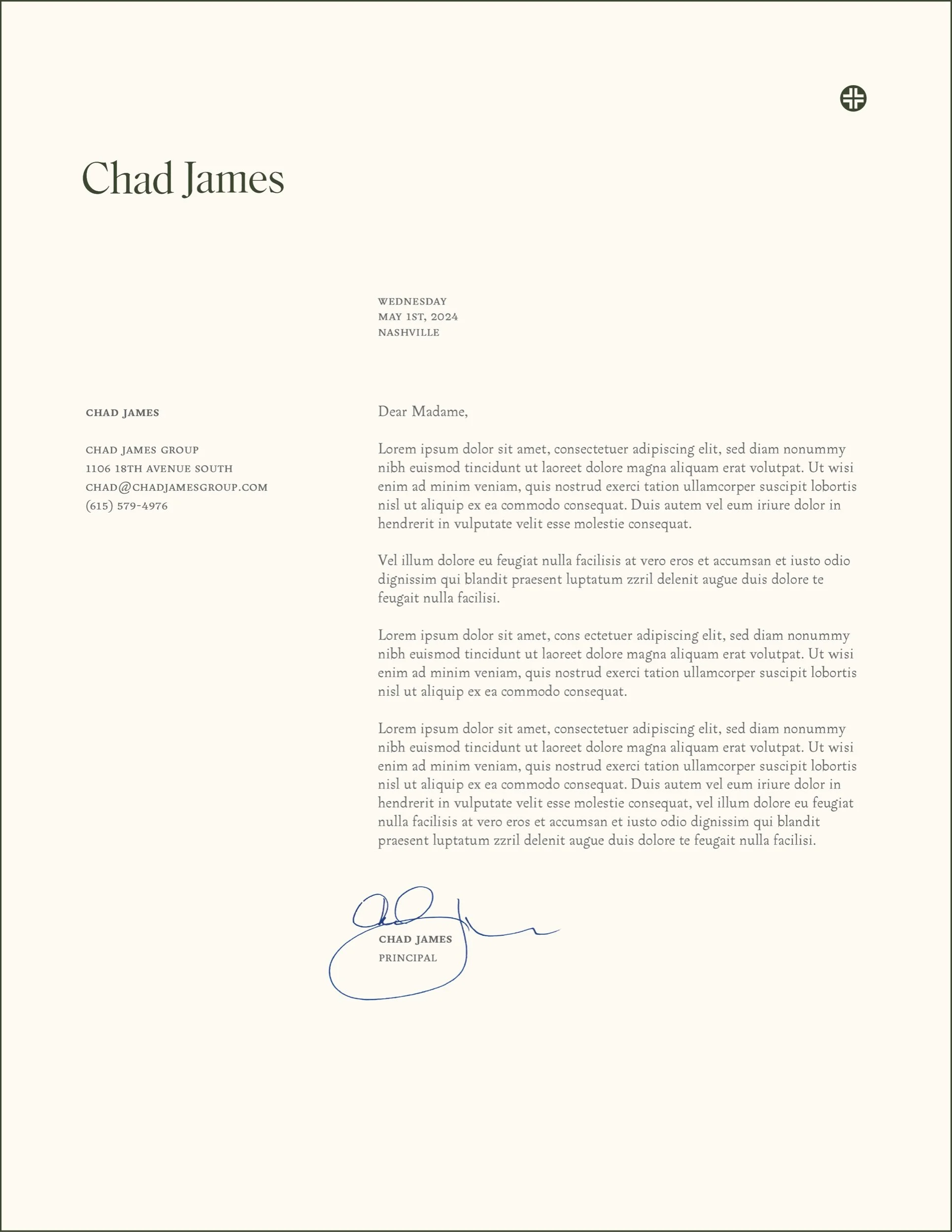
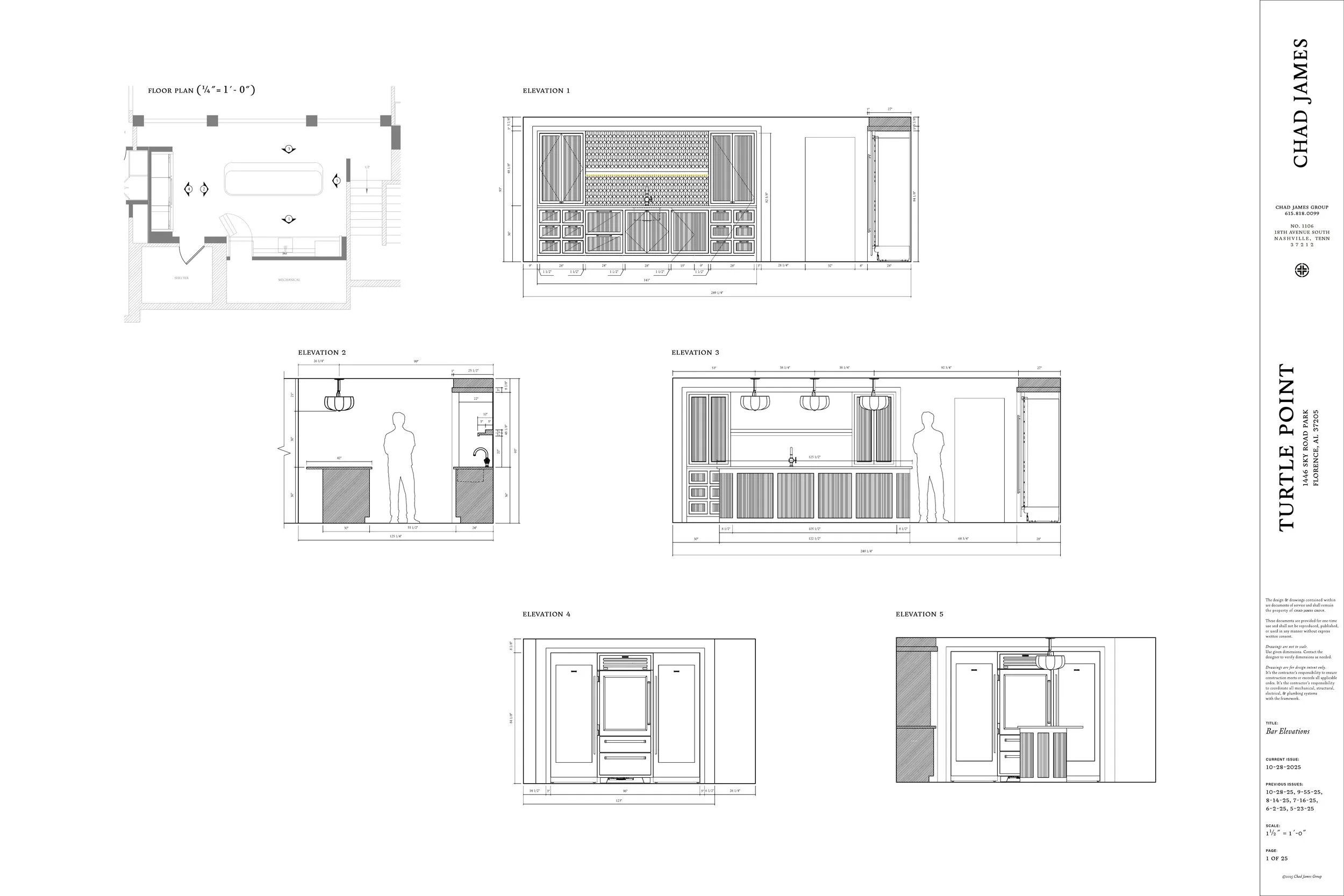
Letterhead, envelopes and email signatures all come from one set of guides, and the CAD title block carries the brand onto every drawing set the firm issues.
The product library is a searchable record of everything the firm specifies, with images and specs. Airtable holds the records and Cloudinary holds the images; the library feeds the templates, the InDesign catalog and the client gallery. The tools that build and maintain it are described below.
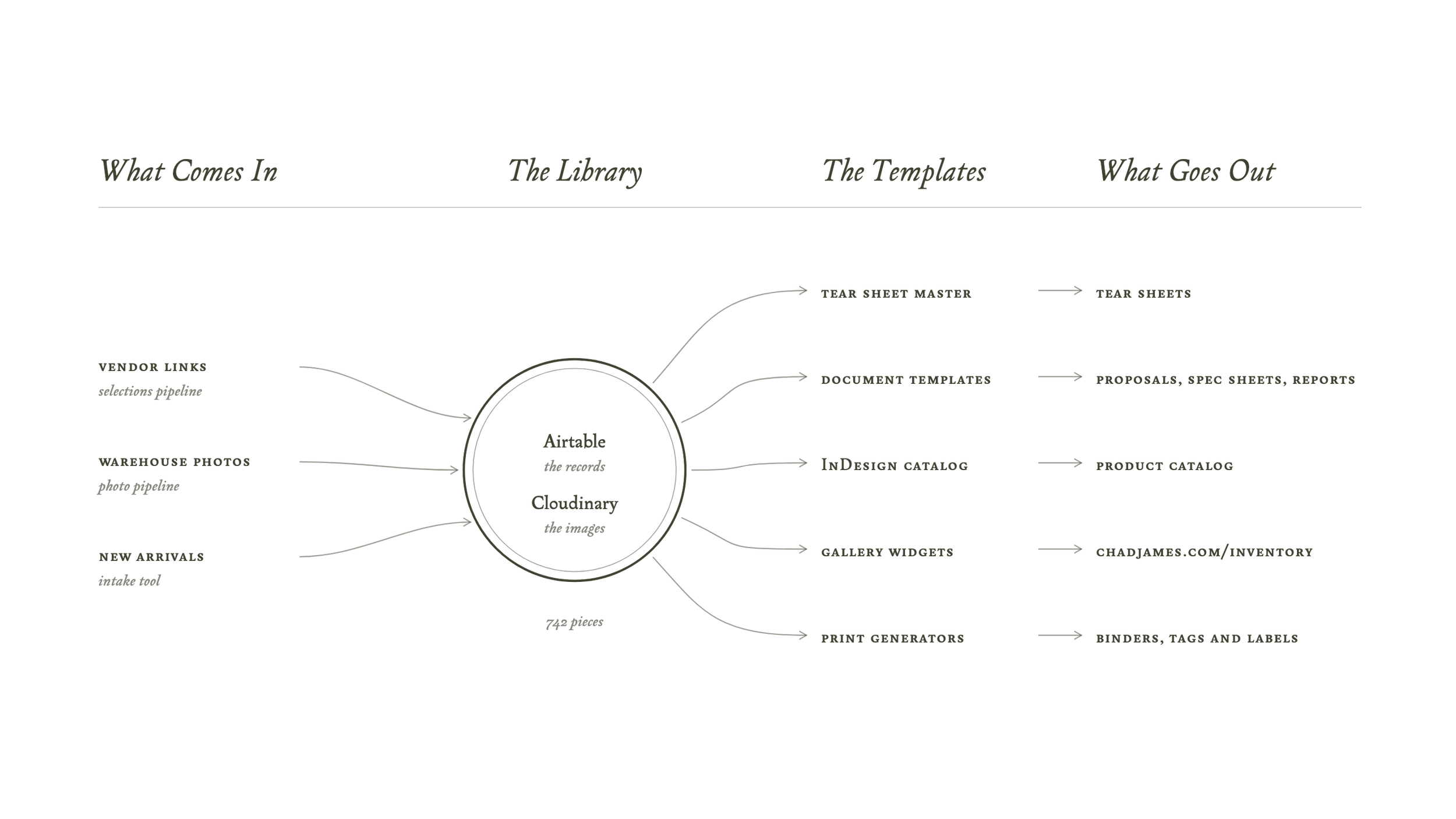
The templates are built for people who are not designers. Proposals, spec sheets and progress reports come out on-brand without manual formatting. The firm’s interior designers and production staff use them without any graphic design experience.
The website is a redesign built around the firm’s interiors portfolio.
The tools
Inventory library and client gallery. The firm holds several hundred pieces of furniture, lighting and art for client projects. Each is an Airtable record with a Cloudinary image, dimensions, materials and period. A curated subset feeds an unlinked gallery on the firm’s website: seven category pages the designers send to clients. Each page is one self-contained widget that reads Airtable live, so a change in the base shows on the site with no redeploy. Clients mark pieces with a heart to build a pull list, kept in the browser, and send it back as an inquiry.
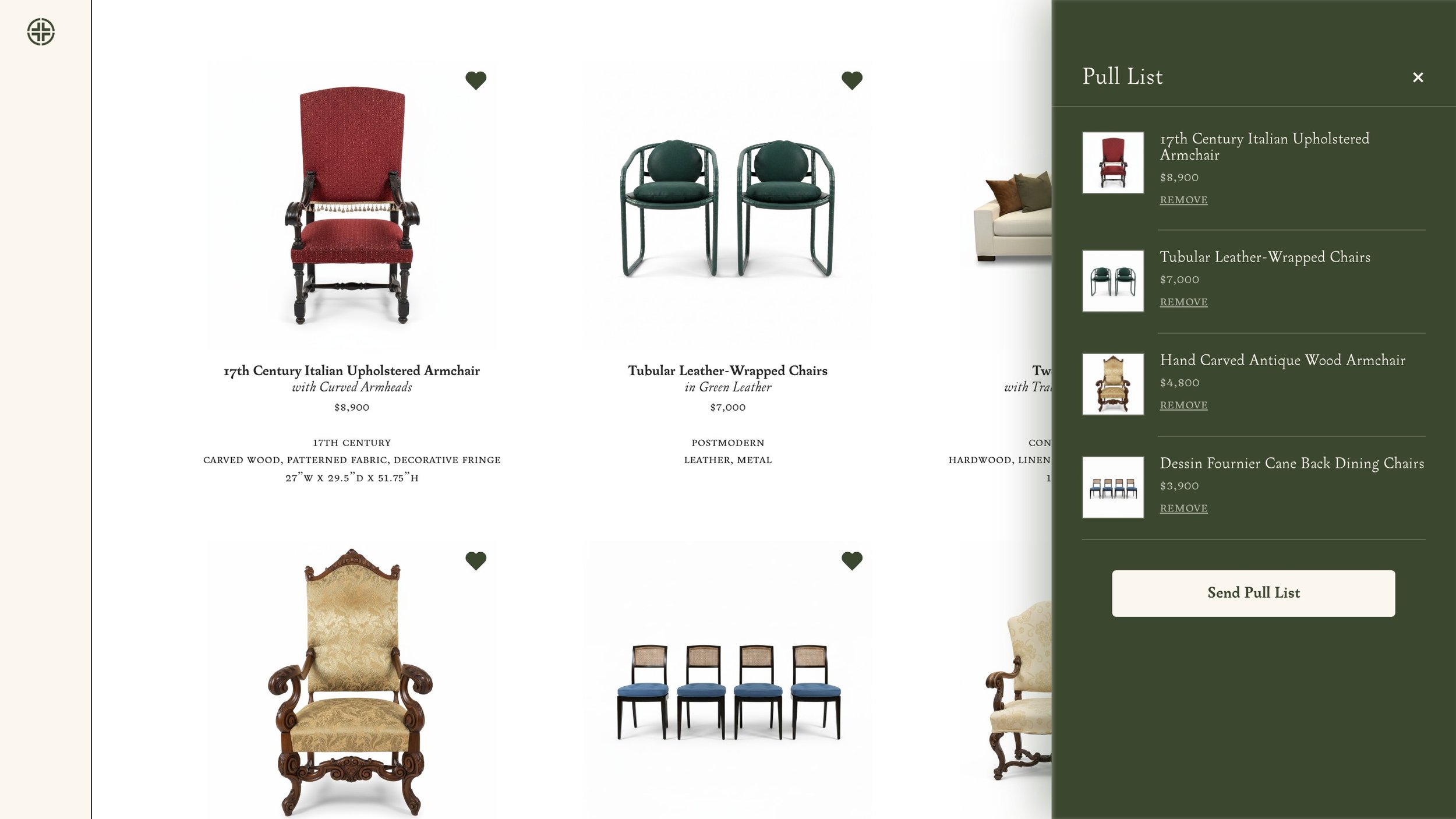
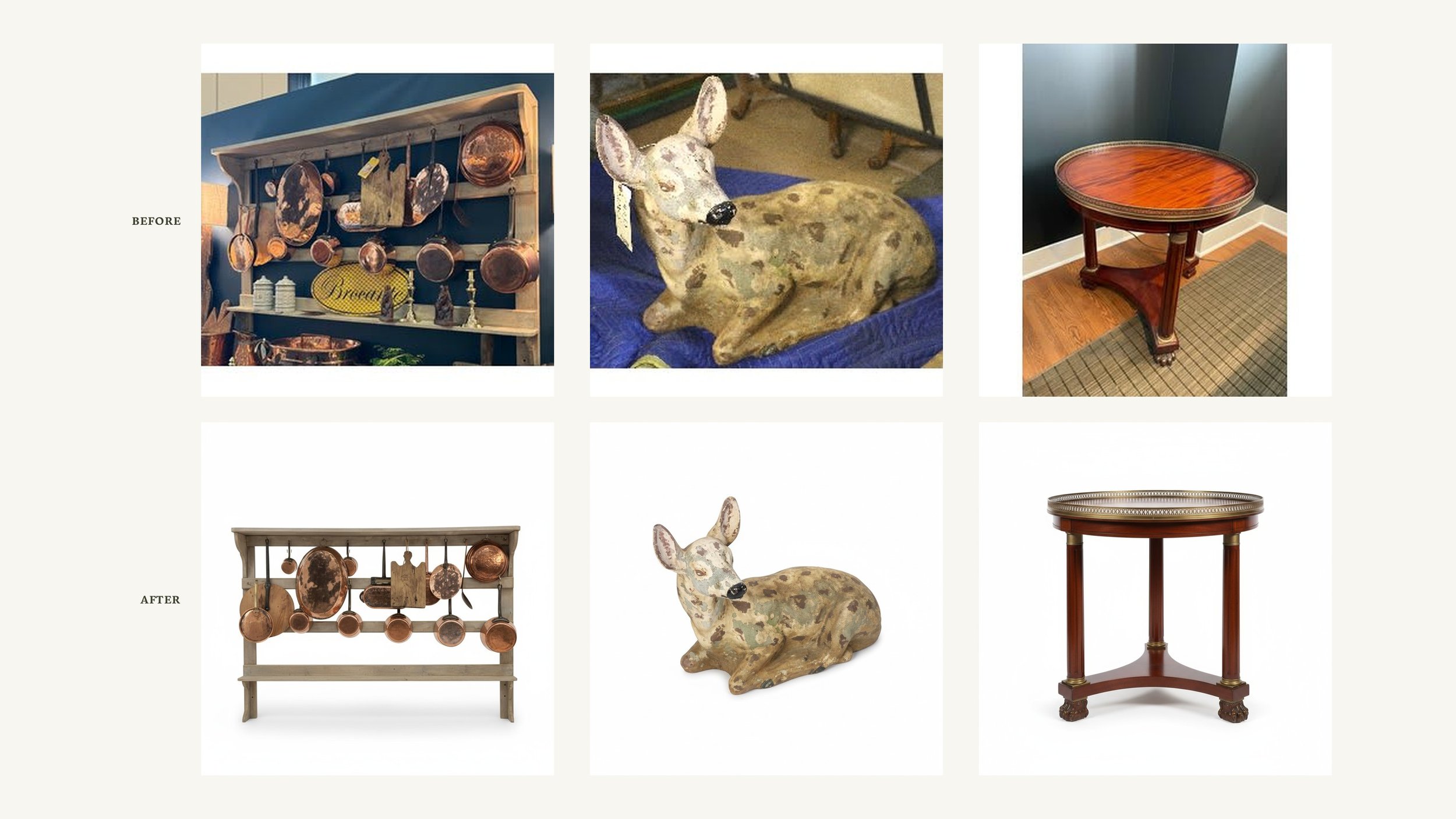
Photo pipeline. Most of the inventory had been photographed in a warehouse, with mixed backgrounds and odd angles, and reshooting hundreds of pieces was not an option. I built an n8n workflow that reads a CSV export of the staged inventory, pivots each row into one job per image, downloads the original through a Cloudinary square-crop transform, and sends it to Gemini’s image model through OpenRouter with a fixed studio brief: white background, the piece filling nine tenths of the frame, camera square to its face, a soft shadow so it does not float. The result is checked for a valid image, uploaded to Cloudinary with the slide number and original URL attached as metadata, and logged as a success or failure row in a review sheet. Two companion workflows use Claude to write catalog metadata for each piece and to split raw titles into the editorial title and subtitle the gallery shows, stripping provenance and room names on the way. Once the bulk run was done I rewrote the pipeline as a Python command-line tool for new arrivals: drop a photo in a folder and it comes out as a complete Airtable record with a clean product image.
Printables. Binder covers and room divider tabs, fabric tags, room labels, quarter-size tear sheets for pin-up boards and a print catalogue of the warehouse were all edited by hand in Illustrator, one project at a time. Each is now a single file that opens in Chrome, takes a short form or a dropped export, and prints at true size. Staff use them without opening Illustrator.
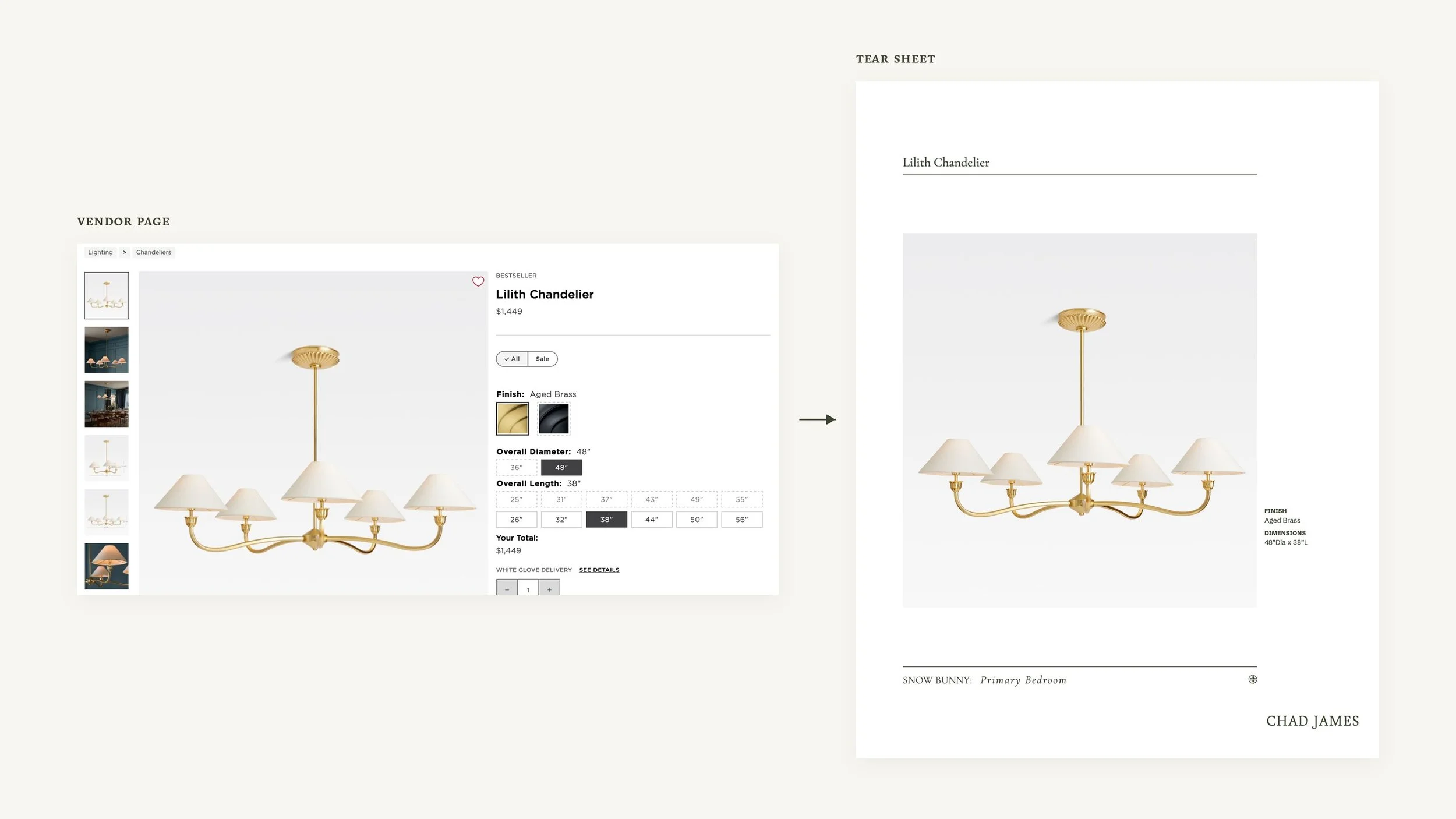
Selections pipeline. When a designer specifies a product, the client needs a tear sheet. This tool takes a product URL, scrapes the vendor page through the store’s product API, JSON-LD or the page markup, resolves the finish the designer asked for against the vendor’s variants with a fuzzy match over trade abbreviations, picks the hero image, writes the record to Airtable and generates the branded tear sheet by duplicating the Google Slides master.
Where it stands
In daily use at the firm. The inventory base holds 742 pieces; 153 carry an AI-regenerated product photo and 366 carry AI-written catalog copy. The client gallery shows 219 pieces across seven categories.